How a project runs
Eight stages. Nothing moves on a conversation alone.
Every project runs through the same eight stages, in the same order, whether it is a single roof or a commercial building.
Every stage ends in something you can read.
How a project runs
Eight stages. Nothing moves on a conversation alone.
01
Consultation & assessment
What the property allows and what you actually need, established before anything is designed.
02
Design & proposal
An array layout and a written scope with defined boundaries, so there is nothing to discover later.
03
Planning & installation
Access, safety and dates agreed up front; an as-built record kept as the work proceeds.
04
Commissioning & handover
Tested, documented and handed over with monitoring access set up in your name.
The eight stages
What happens at each step, and what you get out of it.
STEP 01
Initial consultation
A conversation about the property, what it is used for, and what you want the system to do. This is where we establish whether solar makes sense here at all, and say so if it does not.
What we need from you: A description of the property and a rough idea of your electricity use.
What you receive: An honest first view on whether the project is worth pursuing.
STEP 02
Property and energy assessment
A site visit covering the roof, the structure, shading across the day, the consumer unit or distribution board, and the practical cable routes. Consumption data is reviewed alongside it.
What we need from you: Access to the roof and the electrical installation, and recent electricity invoices or usage data.
What you receive: A written record of what the property allows and what constrains it.
STEP 03
Technical design
Array layout, inverter and protection selection, and decisions on storage and charging. Anything intended for a later phase is designed for now, even if it is not installed.
What we need from you: Your view on what may be added later: a battery, a vehicle, an extension.
What you receive: An array layout, a single-line diagram and a component list with the reasoning behind each choice.
STEP 04
Proposal and scope
The design turned into a written scope: what is installed, what is prepared, what is excluded, and what conditions the price depends on.
What we need from you: Time to read it, and questions about anything that is not clear.
What you receive: A proposal with defined boundaries, so there is nothing to discover later.
STEP 05
Installation planning
Access, roof safety, deliveries, isolation windows and dates. For a business, this is sequenced around trading hours; for a household, around the household.
What we need from you: Agreement on dates and on when the supply may be interrupted.
What you receive: A schedule with the disruptive moments identified in advance.
STEP 06
Installation
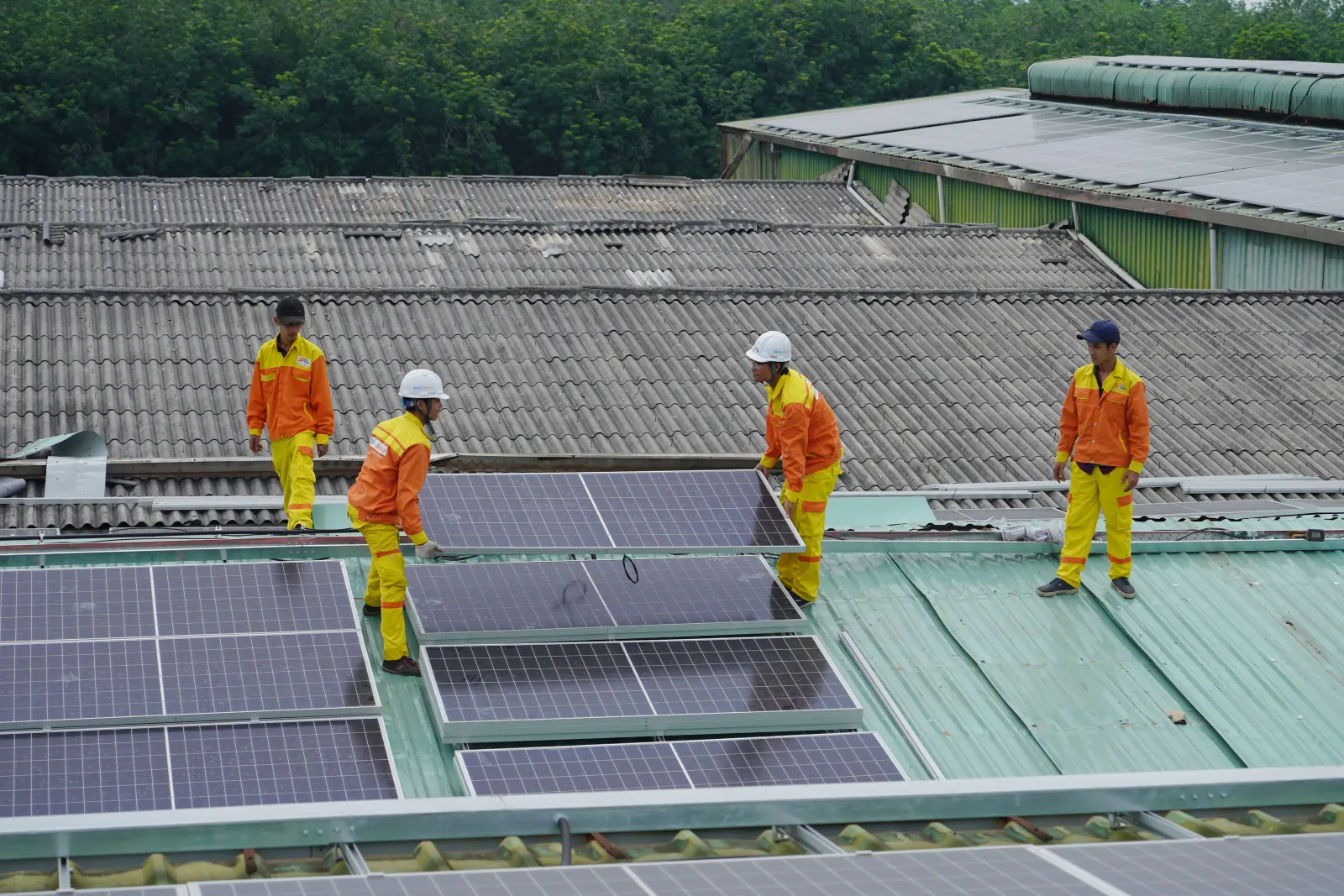
Mounting, array, cabling, inverter and protection, plus any battery or charge point. Roof penetrations and cable routes are recorded as the work proceeds.
What we need from you: Site access as agreed.
What you receive: The installed system, and an as-built record rather than a drawing of what was planned.
STEP 07
Commissioning
Testing, configuration and the setup of monitoring. The system is verified as installed, not as designed.
What we need from you: Nothing, beyond somewhere to connect the monitoring.
What you receive: Test and commissioning records, and a system configured and running.
STEP 08
Handover and monitoring
A walkthrough of the system, the documentation pack, and monitoring access set up in your name. You are shown what a normal day looks like so an abnormal one stands out.
What we need from you: An hour, and whoever will actually be responsible for the system.
What you receive: Drawings, datasheets, test records and working monitoring access, in one place.
Worth stating plainly
Things this process does not promise
Permits and permissions
Requirements vary by municipality, by building and over time. Which permissions apply to your property is established for that project, never assumed from another one.
Grants and tariffs
Incentives, tariffs and grid arrangements change. Anything of that kind is checked at the time of your project and stated with its source, rather than quoted from a website.
Guaranteed output
Generation depends on weather, shading, soiling and use. A design can state expected behaviour under stated assumptions; it cannot guarantee a yield.
A generic warranty
Warranty terms are stated for the specific components and installer used in your project, not copied from an industry average.
Next step