Category: Insights

  • Monitoring a solar system: what should you actually watch?

    Monitoring a solar system: what should you actually watch?

    Every system installed with monitoring produces a dashboard full of figures: instantaneous output, daily totals, historical charts, and sometimes per-panel detail. Most of that detail is not something anyone needs to check regularly. A short list of comparisons is what actually tells you whether the system is behaving normally.

    Compare against your own history, not a headline figure

    The most useful comparison is a day, week or month against the same period in a previous year, or against a recent stretch of similar weather. A sudden drop against your own history is meaningful. A number that sounds low compared to someone else's system, with a different roof and different weather, usually is not.

    A sustained drop is worth investigating

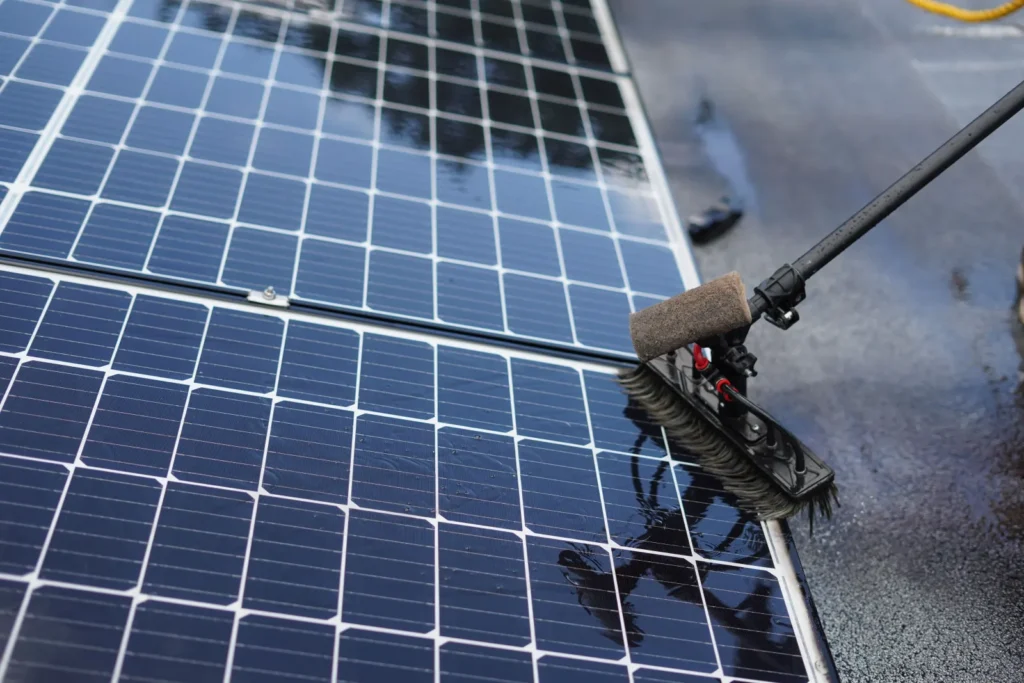
    Day-to-day variation from weather is normal and not a fault. A drop that persists across several clear days, or that appears only on part of the array, is the pattern worth looking into: it can point to soiling, a developing shading issue, or a fault in part of the system.

    Consumption and generation together

    Generation alone only shows half the picture. Viewed alongside consumption, monitoring shows how much generation is actually being used on site, which is the figure that reflects how well the system fits the property, not just how sunny it has been.

    Battery state, where fitted

    For a system with storage, whether the battery is regularly reaching a low state of charge before generation resumes, or is consistently underused, indicates whether its capacity is well matched to the property's actual pattern of use.

    Who should be looking at it

    Monitoring access is only useful if someone actually checks it occasionally. For a household, that is usually whoever manages the home; for a business, it should be the person responsible for the building, not only the installer. A system nobody looks at is a system where a fault can go unnoticed for months.

    A short, practical checklist

    • Compare recent output against the same period last year
    • Watch for a drop that persists across several clear days
    • Check generation against consumption, not generation alone
    • For a system with storage, watch how consistently the battery is used

    Related: Solar Solutions

    This article is general, technical background written for the Solara Energy demonstration website. It is not project-specific advice.

  • Planning solar during a renovation

    Planning solar during a renovation

    Solar does not have to be installed the same year a renovation happens to benefit from it. While walls are open, roofs are being re-covered, or a consumer unit is being replaced anyway, the cost of preparing for solar is a fraction of what it would be as a standalone project afterwards.

    What is worth doing during the build

    Even where the array itself is a later phase, a small number of provisions made during a renovation remove most of the cost of adding solar afterwards.

    • Running an empty conduit from the roof to the intended inverter position
    • Reserving space in a new or replaced consumer unit for solar and battery circuits
    • Reinforcing a roof section that will later carry panel mounting, if the structure needs it
    • Confirming the roof covering and structure are suitable before it is finished and closed up

    Re-roofing is a particular opportunity

    If a roof covering is being replaced as part of the renovation, that is close to the ideal moment to fit solar mounting, since the roof will not need to be reopened for it later, and any structural work can happen while the roof is already stripped back.

    A new consumer unit changes what is easy later

    A consumer unit installed without spare capacity or a considered layout can make adding solar, a battery or a charge point later more disruptive than it needs to be. Discussing future circuits at the point a board is being replaced anyway costs little extra.

    Extensions and changes of use

    An extension changes the roof, the electrical load, and sometimes the shading on the existing roof as well. Where an extension is planned, it is worth having the solar conversation before the extension's design is finalised, not after.

    On permits and regulations

    Requirements for building and electrical work vary by municipality and can change over time. This article does not state specific rules, since they need to be confirmed for your project and location at the time you build. Raise solar plans with whoever is managing the renovation's permissions, so they can be checked alongside everything else.


    Related: Residential Solar

    This article is general, technical background written for the Solara Energy demonstration website. It is not project-specific advice.

  • What happens during a solar site assessment?

    What happens during a solar site assessment?

    Before a proposal can say anything specific about a property, someone has to look at the roof and the electrical installation, and review how the property uses power. That visit is the site assessment, and what it establishes shapes everything that follows.

    The roof survey

    Usable surface, orientation of each roof face, pitch, covering and structural condition are recorded, along with anything that shades the roof at any point in the day or the year: chimneys, parapets, trees, aerials, and neighbouring buildings.

    On a flat roof, plant, walkways and the safety zone around the edge are measured, since these often reduce the genuinely usable area well below what a plan or a satellite image suggests.

    The electrical survey

    The consumer unit or distribution board is inspected for spare capacity, its general condition, and where new circuits could realistically connect. The supply capacity into the property is checked, along with the practical cable route from the roof to the board.

    Reviewing energy use

    Recent electricity invoices establish overall consumption. Interval data, where your supplier provides it, is more useful still, because it shows the shape of demand across the day rather than just the total. Where interval data is not available, a description of the household or business routine is a reasonable substitute.

    Discussing what might change

    An electric vehicle, an extension, a pool, new equipment, or a change of use all affect the design, even when they are a few years away. Raising them at this stage is what lets a design reserve capacity for them, rather than needing rework later.

    What to have ready

    • Recent electricity invoices, or interval data if available
    • Access to the roof and the consumer unit or distribution board
    • Any known roof or electrical issues, however minor
    • A rough sense of what might be added to the property in future

    What comes out of it

    A written record of the property's conditions and constraints, which becomes the basis for the technical design and, from there, the proposal.


    Related: Process

    This article is general, technical background written for the Solara Energy demonstration website. It is not project-specific advice.

  • Residential vs commercial solar: the key design differences

    Residential vs commercial solar: the key design differences

    The panels, inverters and cabling behind a residential and a commercial solar system are drawn from the same technology. What differs, often substantially, is how the system is assessed, sized and installed, because homes and businesses use electricity, use their roofs and are occupied in different ways.

    Load profile

    Residential demand tends to concentrate in the morning and evening, around occupancy, cooking and, in this region, air conditioning through the summer. Commercial demand more often concentrates during opening or operating hours, which for many businesses overlaps closely with generation.

    This single difference is usually what decides whether storage is worth discussing, more than any other factor.

    Roof and structure

    A residential roof is typically pitched, single-occupant, and free of plant. A commercial roof is more often flat, shared with air conditioning units, ducting and maintenance access, and subject to safety zones around its edges. The usable surface on a commercial roof is frequently smaller than the total area suggests.

    Decision-making and documentation

    A residential project usually has one or two decision-makers who will also live with the result day to day. A commercial project often involves a building owner, an operator, and sometimes a separate facilities contractor, each of whom needs different information: financial justification, operational impact, and technical detail respectively.

    Documentation matters more, not less, in a commercial setting, because the people managing the system in five years may not be the people who commissioned it.

    Installation constraints

    A residential installation is scheduled around a household's daily routine and, usually, a short supply interruption. A commercial installation is scheduled around trading hours, and the disruptive parts of the work, particularly the electrical connection, are planned into a single agreed window so the business does not close.

    Where they are more alike than different

    Underneath these differences, both cases follow the same design order: assess the building, understand the load, then select components. Neither should start from a preferred system size.


    Related: Solar Solutions

    This article is general, technical background written for the Solara Energy demonstration website. It is not project-specific advice.

  • Solar and EV charging: planning them as one system

    Solar and EV charging: planning them as one system

    An electric vehicle charge point typically draws more power than almost anything else in a home or small business. Added after a solar installation is finished, it competes with the rest of the property for whatever capacity is left. Planned alongside the system, it can be one of the loads the system is actually designed around.

    Capacity is usually the real constraint

    Before anything about solar integration, a charge point needs a supply that can carry it alongside everything else in the property. This is a capacity question first, and it is worth checking early rather than assuming it will work itself out.

    Where capacity is tight, load management, which limits or pauses the charger's draw when the rest of the property is busy, is often more practical than an expensive supply upgrade.

    Charging from generation depends on presence, not just equipment

    A vehicle can only charge from that day's generation while it is actually parked and plugged in during generating hours. A car that leaves for work every morning and returns after dark cannot charge from the array unless a battery is involved, no matter how the charger is configured.

    Workplace charging is often a better technical fit for this reason: vehicles are typically parked through the middle of the day, exactly when generation is highest.

    What "solar integration" actually configures

    Where a charge point is described as solar-integrated, that usually means it can be set to favour surplus generation, reduce its rate as generation falls, or pause when the property's other demand is high. The specifics depend on the equipment installed, which this article does not name.

    Planning for more than one charger

    A single charge point today is often the first of several: a second vehicle, a visitor charger at a business, or additional points as a fleet grows. Reserving cable containment, board space and capacity for a second point at the time of the first installation avoids reopening finished work later.

    What to establish before installation

    • Available electrical capacity once the charger and everything else are accounted for
    • When the vehicle is typically parked, relative to generating hours
    • Whether load management is needed to fit within existing capacity
    • Whether a second charge point should be planned for now, even if not installed

    Related: EV Charging

    This article is general, technical background written for the Solara Energy demonstration website. It is not project-specific advice.

  • When does battery storage make sense?

    When does battery storage make sense?

    Battery storage is often presented as a natural companion to solar, and sometimes it is. But a battery is a specific answer to a specific problem: a gap between when a property generates electricity and when it uses it. Where that gap is small, a battery has less to do.

    The question a battery actually answers

    Solar panels generate mostly around midday. If a property's demand also peaks around midday, most of that generation is used as it is produced, and a battery has comparatively little surplus left to store.

    If a property's demand peaks in the evening or overnight, a significant share of daytime generation would otherwise be exported. A battery captures part of that surplus and releases it later, when the property is actually drawing power.

    Residential and commercial cases usually differ

    A household that is out during the day and home in the evening is a common example of a real gap. A business that operates mainly during the hours it also generates, such as many offices, retail units and workshops, is a common example of a small gap.

    Hospitality is more mixed: a restaurant open mainly for dinner service has a clear gap; a hotel with continuous daytime occupancy and daytime laundry or kitchen loads may not.

    Backup power is a separate question

    Storing surplus generation for later use is a different function from keeping the lights on during a power cut. Backup requires specific equipment and wiring, usually covers only selected circuits, and is not automatic just because a battery is installed. If backup matters to you, say so explicitly during the assessment.

    Sizing follows the gap, not the roof

    Where a battery is worthwhile, its capacity should be set against the energy the property draws in its gap period on a typical day, not against the peak output of the array. Sizing for the best generating day of the year usually leaves the battery under-used most of the time.

    Questions worth asking before adding one

    • How large is the gap between our generation hours and our demand hours?
    • Is that gap consistent across the week, or does it vary by day?
    • Do we want backup during a power cut, and does the proposed system actually provide it?
    • Would reserving capacity for a battery now, without buying one yet, be the more sensible first step?

    Related: Battery Storage

    This article is general, technical background written for the Solara Energy demonstration website. It is not project-specific advice.

  • Solar panels and roof orientation: what actually matters?

    Solar panels and roof orientation: what actually matters?

    South-facing is the answer most people expect when they ask about roof orientation, and it is often the best single orientation. It is rarely the whole story, particularly on a property with more than one roof face or with anything nearby that casts a shadow.

    Orientation sets a curve, not a cut-off

    A south-facing array generates the most total energy over a day, with a curve peaked around midday. East and west orientations generate less in total but spread that generation earlier or later in the day.

    For a property whose demand is spread across the morning and afternoon rather than concentrated at midday, an east-west split can sometimes suit the building better than a single south-facing array, even though its total output is lower.

    Pitch interacts with orientation

    The angle of the roof changes how much any given orientation actually receives. A shallow pitch is more forgiving of orientation away from south; a steep pitch rewards getting the orientation right and penalises getting it wrong.

    Shading is usually the bigger factor

    A well-oriented roof with a chimney, a neighbouring building or a mature tree casting a shadow across part of the array for part of the day can underperform a modestly-oriented roof with a clear view of the sky.

    Shading also changes seasonally. A tree that is bare in winter and full in summer, or a low winter sun that clears an obstruction a taller summer sun does not, both need to be assessed across the year, not on a single site visit.

    Multiple roof faces are common, not exceptional

    Many properties, particularly villas and townhouses, have more than one usable roof face. Splitting the array across them, with separate strings or micro-inverters where appropriate, is often the practical answer rather than trying to force everything onto the single best-oriented section.

    What a site assessment actually checks

    A useful orientation assessment goes beyond a compass reading:

    • Compass orientation of every usable roof face
    • Pitch of each face
    • Shading from nearby structures and vegetation, across the seasons
    • Whether splitting the array across faces suits the property's demand pattern

    Related: Residential Solar

    This article is general, technical background written for the Solara Energy demonstration website. It is not project-specific advice.

  • How to size a solar system around real energy use

    How to size a solar system around real energy use

    It is tempting to size a solar system from a single number: annual electricity consumption in kWh. That number is a starting point, but on its own it can lead to a system that is the wrong shape for the property, even when the total is right.

    Annual totals hide the shape of demand

    Two properties can consume exactly the same amount of electricity in a year and need very different systems, because when they use it differs.

    A house that is empty during the day and busy in the evening has a demand curve that runs opposite to a south-facing array's generation curve. A workshop that runs machinery from nine to five has a demand curve that tracks it closely. The annual total says nothing about this difference; the daily and seasonal pattern does.

    Interval data is worth asking for

    Where it is available, half-hourly or hourly consumption data shows the actual shape of demand across a week or a season, rather than an average. This is the single most useful input to a sizing exercise, and it is worth requesting from your electricity supplier before an assessment.

    Where interval data is not available, a written description of the household or business routine is a reasonable substitute: when people are home or on site, what runs continuously, and what happens seasonally.

    The roof sets the ceiling, not the target

    A common mistake is to size the array to fill the available roof, then decide afterwards whether that generation will be used. It is more useful to work in the other direction: establish how much can realistically be used on site, including anything stored in a battery, and use that figure to decide how much of the roof is actually worth covering.

    Filling the whole roof is sometimes still the right answer, particularly when a future EV charger or an extension is already planned. But it should be a decision, not a default.

    Storage changes the calculation

    If a battery is part of the system, sizing shifts from covering daytime use to covering a defined evening or overnight period. That is a different, and usually smaller, number than the array's total daily output, which is why battery capacity and array size are sized against different questions.

    What a proper sizing exercise produces

    A sizing decision that can be explained will reference:

    • The usable roof area after orientation and shading are accounted for
    • The shape of consumption across a representative day or week
    • What share of that consumption the system is intended to cover
    • Whether storage and future loads such as EV charging are included

    Related: Solar Solutions

    This article is general, technical background written for the Solara Energy demonstration website. It is not project-specific advice.